


- Home
- About Ridley
- Athletics
- Admissions
- Student Experience
- Boarding
- Alumni & Donors
- Camps & Summer Programmes
- Rentals & Memberships
- Login

P.O. Box 3013, 2 Ridley Road St. Catharines, Ontario L2R 7C3 Canada - +1 905-684-1889
A Story from the Summer 2023 edition of Tiger.
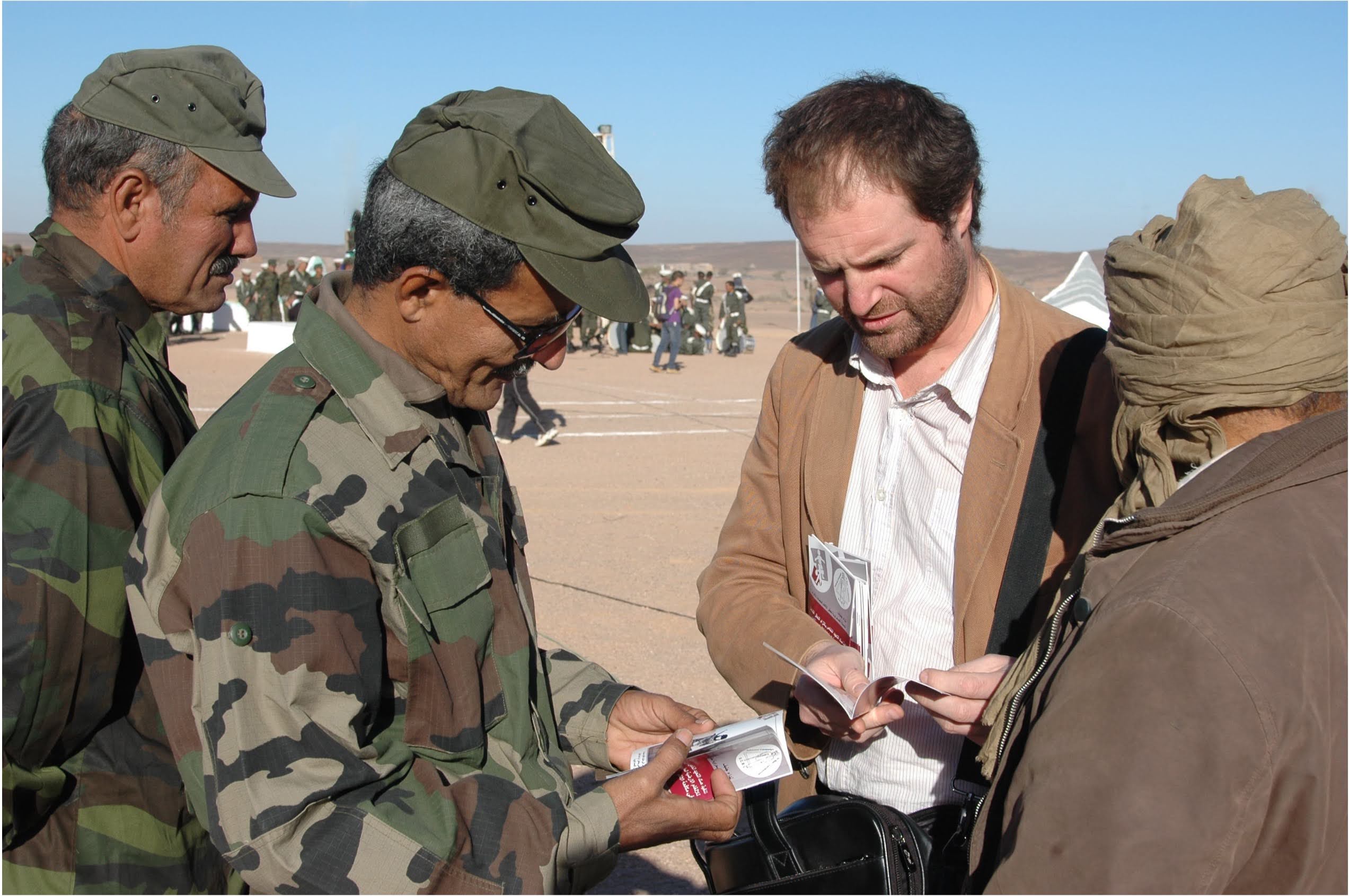
For decades, Adrian Goodliffe ’93 has been a tireless crusader for humanitarian action. His commitment to Terar Dum Prosim has taken him on mission to the far reaches of the globe as a former field delegate and fundraiser for the International Red Cross.
Throughout his career, Adrian has supported humanitarian efforts in Africa and the Middle East in a myriad of ways. His tireless efforts in these regions reflect an unyielding commitment to making our world a better place, despite placing him at the centre of many, often violent, global conflicts.
Adrian Goodliffe came to Ridley College in the eighth grade in 1987. As a student, he played football and rowed, winning the CSSRA Championships as a member of the heavy eight crew in his graduating year. As a student, he reflects that his humanitarian outlook was largely shaped by the influence of two former history teachers, Mr. James Bryan and Mr. Paul Lewis.
“I was able to learn a lot about the large world we live in because Ridley had students from all over the world, and I was coming from North Dakota, so that was a big change,” he explains.
After graduating from Ridley College in 1993, Adrian studied Political Science and French Literature at McGill University. Following that, he briefly taught English in Poland before attending graduate school at the University of Brussels, where he studied International Relations.
Following this final stretch of schooling, he took a job at an NGO in Brussels, where he worked for four years before joining the International Committee of the Red Cross (ICRC) in 2004, an organization which provides humanitarian aid and assistance for victims of war and other violent conflicts.
“My former employer recommended that I join because it would be an amazing opportunity to do some hands-on humanitarian work and really make a difference,” he explains.
“My centre of interest was the Arab world, so I originally went to Damascus in Syria to learn Arabic, then to Palestine and Lebanon. I applied [to the Red Cross] as an Arabic speaker, and that’s how they hired me. My first mission was in the Palestinian territories,” he continues.
Since then, Adrian has done humanitarian missions all over the world. However, the vast majority, he explains, have been in Arabic-speaking countries in Africa.
“My first African mission was in Sudan, and that is probably still my favourite mission. It was extremely difficult but, at the same time, very rewarding. The humanitarian response was important, and our Sudanese colleagues, their families, and the population, in general, were confronted with enormous difficulties. As a foreign humanitarian worker, knowing we would eventually leave these great people we worked and collaborated with in such a difficult crisis, was the most difficult part of the job. But it was an extremely interesting experience with a lot of wonderful human exchanges,” he explains. 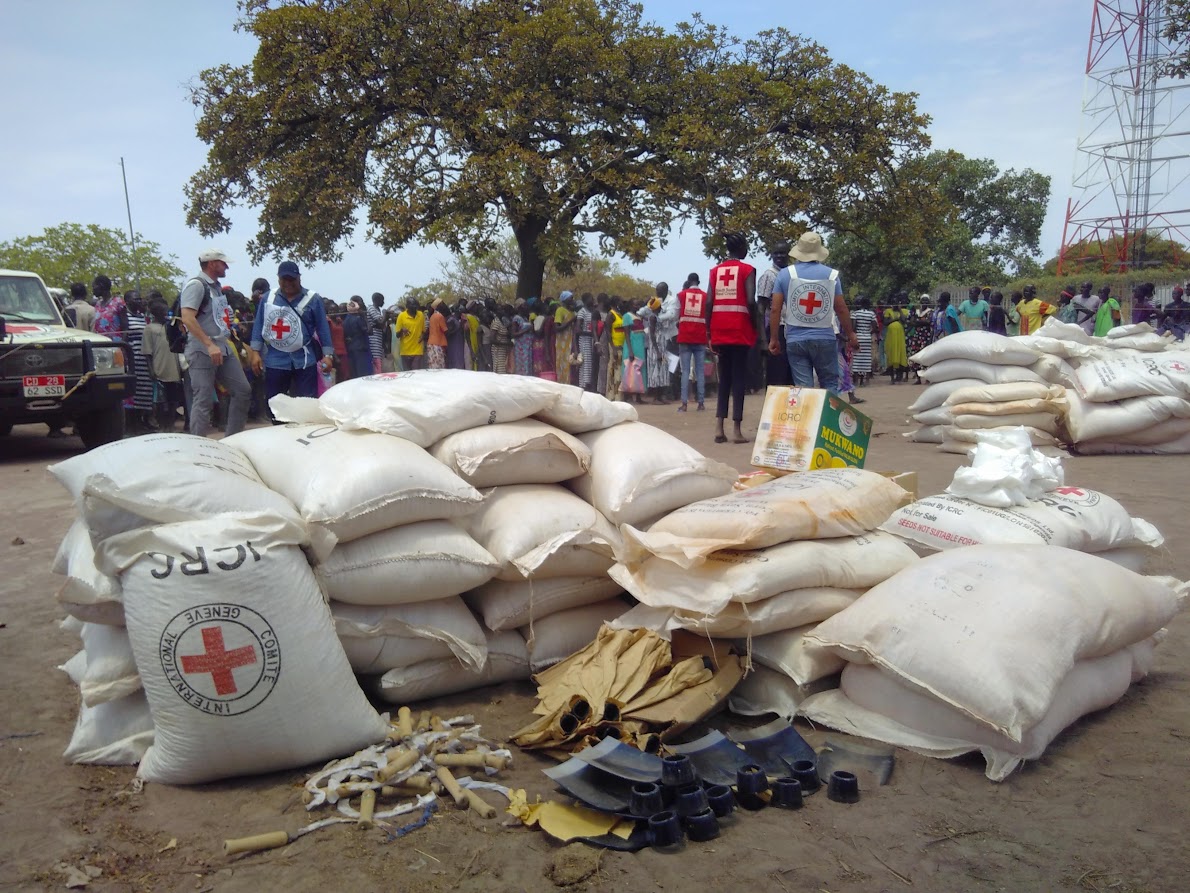
Following his mission in Sudan, he ventured to neighbouring Chad, Senegal, Niger, Mali, the Congo, and Somalia. As a field delegate, his role was twofold and mainly consisted of networking with the military authorities to ensure civilians and prisoners were well treated and overseeing development projects in conflict areas in which he was deployed.
“A lot of the work consists of networking with the authorities to get access to prisoners. It’s your job to tell the authorities — the fighting parties, the armies, or armed groups — that they have to uphold humanitarian principles to protect civilians and prisoners, and we can help them in doing this. People who are not directly involved in the fighting must not be targeted and need to be allowed to pursue their lives as much as possible,” he explains.
“There's a lot of project management as well, where you're also overseeing different projects that are taking place in the area that you cover, whether it’s economic support, microeconomic initiatives, or water and sanitation projects. If they're big infrastructure projects, you tend to get a lot of support from headquarters,” he continues.
For the last 12 years, Adrian has worked at the ICRC's headquarters in Geneva, where he now lives, serving as the Resource Mobilization Head for Africa. In this role, he works with African governments to mobilize their support for the Red Cross and compel them to support the organization financially.
“Fundraising is quite difficult and challenging work. Our budgets are increasing all the time, and it’s very competitive,” he explains. “Many of these African nations are not at all used to contributing to humanitarian organizations. They’re much more used to receiving funding. It’s an interesting dynamic where you’re really trying to persuade them to contribute to the Red Cross."
“A significant part of our budget goes to African operations, something like 42% or 43%, which is an enormous amount of money. About $1 billion Swiss francs is just for Africa,” he explains. “The majority of donors are essentially North American, Western European, and Asian governments. The goal I have is ultimately to get African governments to do their share and contribute to our humanitarian budget.”
When asked what advice he has for young Ridleians, he tells students to set their sights on the world.
“Go out and be open to the world. Don’t stay too set in your ways. Ridley gives you an amazing education, but there’s so much else out there in the world,” he says.
“Get that amazing education — the amazing extracurriculars and sports — then get out and see the world. Travel to places you think are interesting, but also to places you have never really heard about. Get out of your comfort zone. You have your whole life ahead of you,” he concludes.